Pics from the Week
The Latest From Haiti
It's been a while since our last post. Since then, we've been extremely busy. In the past month, we've been able to construction about 200 shelters and have worked out the kinks in the system to eventually build a total of about 1000 shelters by the end of July. With the season's first tropical storms now churning in the Caribbean, this is surely good news for those Haitians still living in tents and bedsheet shelters. Also, Alli has been coordinating a team of Korean doctors and dentists now for about a month and they've finally arrived! They have been seeing hundreds of Haitians in need of basic medical care and dental work in the mountain villages south of Port au Prince. Tonight is there last night and Allison is up there now with the team as I right this post. We'll be finishing up our time here in Haiti and leaving on June 30th for some much needed R & R. I've posted some videos below. Enjoy!
The Clinic
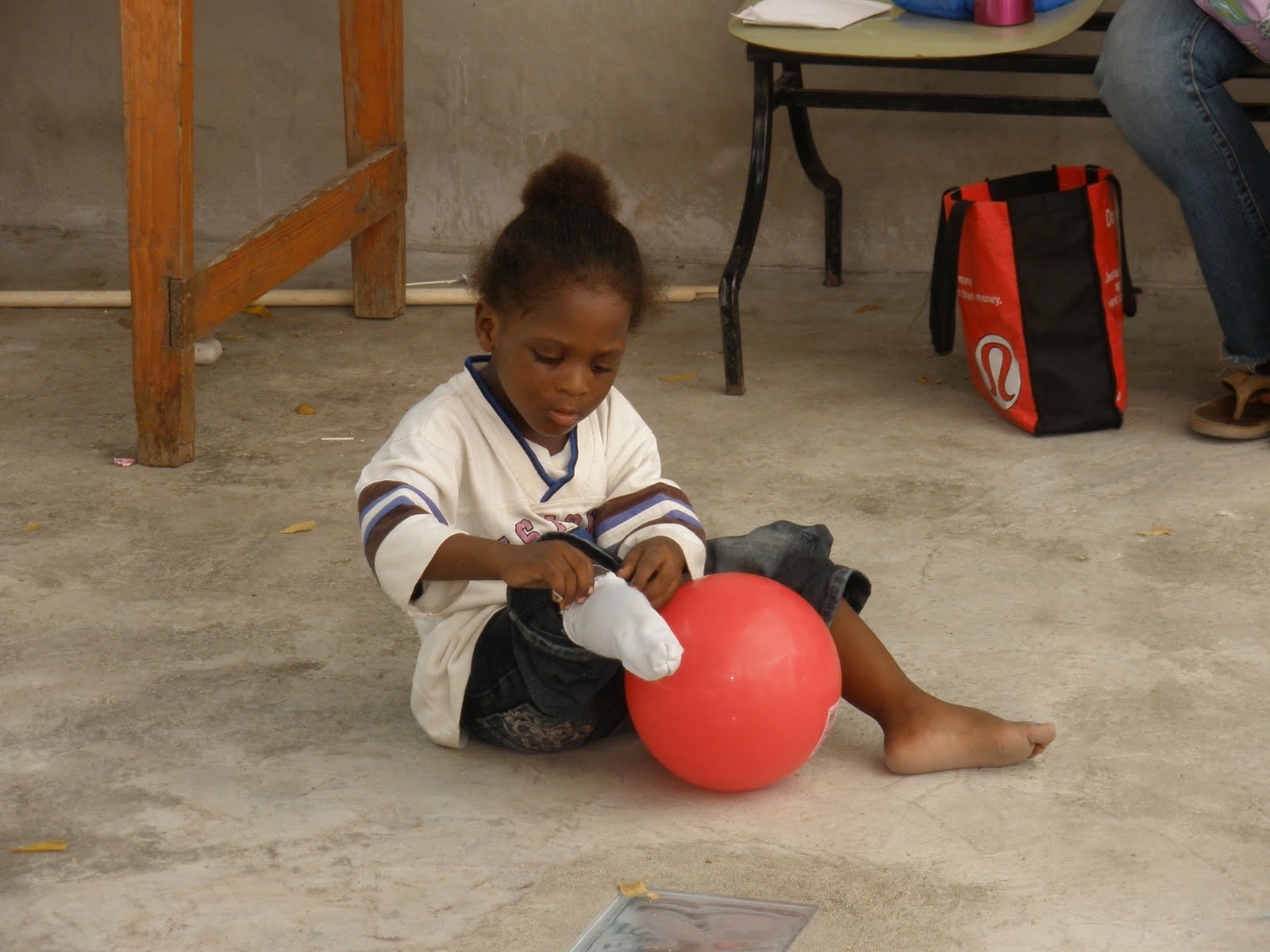
Part of what I (Allison) is doing in Haiti is volunteering in an outdoor physical therapy clinic that is affiliated with a local hospital. A P.T. named Donna came down to Haiti in April and saw a need to start an outpatient physical therapy clinic for post-earthquake injured patients. Physical therapy pretty much does not exist in Haiti. There are no accredited training programs. So, people don't have follow up care after injuries or surgeries. It has been sad to see problems that patients have just from lack of education about how the body works. For example, somewhere, somehow, a lady I'm seeing was told that after her femur (thigh bone) was competely broken in the earthquake and she had some pins put in, she should keep her foot turned out to the side. Because she had no reason not to trust this information, for the past 4 months she has kept her foot turned out to the side 90 degrees, and now is so tight in that position that she cannot turn her foot back in to walk normally. It's just very sad. Volunteer physical therapists from the states rotate in every 2 weeks or so. It has been a very interesting experience. We have seen alot of patients with crush injuries, amputations and anything else you can think of..including a guy who came in today with deep cuts in his arm from being in a knife fight earlier this morning. Thank goodness we had a doctor present who was able to get him fixed up. It has been really amazing to use the skills the Lord has given me to serve Him. I always knew when I was in P.T. school that I probably would not lead the normal P.T. life, working in a clinic for the rest of my life. It has been so amazing to see the journey the Lord has taken me on in regards to my skills as a physical therapist and how He is allowing me to use my gifts to life out scripture by serving the poor, orphaned, widowed and suffering. I wanted to post some pictures of the clinic and some of our patients.
The view from the sidelines...

I dare say, we all still do this today. We sit in front of our high-def flat screens and criticize coaches, yell at players, make character judgments based on a botched 4th and 1 play, and jab at players that show up to training camp overweight, all the while munching on pizza and downing "cold ones." You see, its easy to stand on the sidelines in our freshman years of life having never really touched that soggy, torn-up field of play or sit in our armchairs and criticize the men out their doing it from our air-conditioned living rooms. Our ignorance of what its like to be in the game allows us the audacity to think that we could do it better; that somehow we hold a secret that no one else has ever held before in the history of the game. But, as I quickly and abruptly learned that hot, humid Georgia afternoon, seeing and doing are two very different things. The grunts and sounds of clashing armor take on a very visceral tone when you find yourself "in the trenches". The "weak" tackles don't feel so weak anymore. The slightest collision makes your ears ring louder than the whistles. The game moves faster than you ever could have imagined. The shoulder pads that were so comfortably unhooked while you stood on the sidelines suddenly constricted your breathing as you toed the line of scrimmage. Standing on the sidelines ultimately affords us the privilege of pretending that we could do it better. Removed from the pain, the emotion of the fight, the fears and triumphs that come along with it all affords us the privilege of criticizing others when they come up short. It also, unfortunately, allows us to continue in our romantic views of the game, with their virtue, the popularity it could furnish, and the gain it offers.
Remembering that smell of freshly-cut grass took me to all these places I've just mentioned; all the while standing in the middle of the disaster of Haiti and mission field of Costa Rica. I've realized that I no longer hold dearly the notions of what I thought a missionary was or should be. Nothing fits quite as neatly into boxes like it used to. Seeing and experiencing the suffering and pain first hand has ruined my rosy images of serving the Lord. "Sharing the love of the Christ" no longer has its clean edges. Loving the widow and the orphan isn't so Bounty-fresh anymore. The sounds of grunts and cracks coming from the field aren't just a backdrop to celebrity anymore; they are very real cries for help. The Bible stories I wish I'd paid more attention to in Sunday School are no longer felt-board cutouts but, rather reels of film meant to teach me something about my opponent. Holding up four fingers at the beginning of the fourth quarter is no longer something cool to do (knowing all along that I had no chance of touching the field in such a tight game), but rather a rallying battle cry of perseverance. To put it simply, the novelty of "serving the Lord", in the face of the suffering we've seen, has lost its romance, its luster, and with it its preconceived notions of "what its supposed to be like."
Community Meeting
Pulling up to the destroyed hillside church where we planned to meet, I quickly understood another small part of the plight of these people. Things look quite different standing among them than they do viewed from the car. I was terrified to even stand near the battered and crushed church building. Columns were completely sheared off and the walls of the church had long since fallen. Chickens hunted and pecked the ground in search of anything edible. Old road signs lay on the ground claiming that "siLoE", the neighborhood in which we stood, lie somewhere in the sky, beyond the dark gray rain clouds ominously rolling overhead. Amongst a small group of women with their heads bowed praying, chairs of a dozen shades of rust, bent, some missing backs, others missing legs sat scattered about. Below us, in the valley to the west. lay Port au Prince, shrouded in dust, terrible, suffocating dust. That terrible dust seemed so thick as to block out the noise and commotion surely happening among the crowded streets and back-alley markets. One by one, community leaders and representatives began to file in, each wearing what was presumably the nicest clothes they could muster. In Haiti, what a man wears does as much to define him as his name. Most men entered and took a seat, heads held high, dress slacks covered in dirt and dust, dress shoes missing heels and holes over their toes, and white dress shirts soaked in the sweat it took to get them to the meeting.
I found my mind wandering as the meeting began. Sitting before them, surveying the sea of shiny, black faces, I quickly realized that I was the only foreigner there. A rush of self-awareness slowly made its way up my wet back to my neck and my ears began to burn. I scanned the room to get a feel for the overall attitude; one man smiled pridefully, another's eyes portrayed fear, and yet another's sweaty brow advertised anger and frustration. The heat under this church was stifling. Or was it the tension?
We began the meeting with introductions: our names, where we were from, what we were responsibly for, and one negative thing and one positive thing about ourselves. I was shocked at the relative realness with which Haitians seemed to conduct themselves and their business. After all, to introduce your faults and successes to a strange group of people only happens at cheesy corporate retreats or church camps in the States. So, I stood and introduced myself and why in the world this "blanc" had come to Haiti to help and shared with them that my biggest fault was that I tend to see the bad in people first. To break the ice a bit, I then explained that my most positive trait was that I had a wife that makes me see the best in people. That, thankfully, drew a few laughs from the group. The meeting trudged along as the shiny black faces turned to each other with excited looks, then disappointed looks, then confused looks again. Every major point that was discussed was relayed to me via translator and I slowly began to understood the reason for the looks being exchanged at each crossroads. Long stints of babbling in Creole were broken periodically by violent, forceful, monologues bellowed from the strained throats of impassioned community representatives describing the plight of their respective peoples and beseeching us to meet needs here and there. Finally, one quiet old lady stood with hands clasped, curtsied, and began to speak in a still, small voice. She began to thank us for what we were doing and apologize that the meeting was getting so far off track. Her petite, frail words were buried in an instant by thunderous naysayers trumpeting their causes. Shriveling under the heat of these bursts of anger, she dropped her head to sit again; pausing for a second as our eyes caught. With an understanding and appreciative smile, in an instant she and I connected.
Closing the meeting, we asked one of the pastors present to pray for our efforts. And, as if on cue, the rain began; a weary sigh growing into rapid taps of thunder on the plastic roof overhead. Under the blankets of water falling from the sky, the pastor's words faded away until all that could be heard was an occasional deep guttural Creole syllable. I've always known that the devil was alive and well in Haiti. The way the rain stopped abruptly at the end of this man's prayer only solidified my suspicions. There are forces here that do not want us to succeed. There are things that happen here that are beyond rain.
We stood around for a while afterwards as we all individually discussed the topics that were brought up during the meeting. As it turns out, in Haiti, this is when you really get to know what's on a person's mind, what's on their heart, and how they really feel about certain issues. They'll share things with you during these times they would not dare share within the group. In many ways, I was told, this is why the meeting exists; for these times afterwards when the real "business" gets handled. Over fruit punch and croissants, we came to understand just how complicated helping people in Haiti can be.
The roads through Siloe, by the time we pulled out of the muddy embankment where we docked the car, were raging torrents of rainwater, sludgy sewage, and a thousand plastic bags. The rainwater had risen in some places to the bottom of the doors of the car. In many places you could not see where the road ended and the storm sewers began. I learned something funny this day. Passing countless goats huddled under palm branches, old rusted-out cars, and overturned wheelbarrows, I realized: Goats don't like to get wet. My chuckles were cut short by what I noticed behind the goats. It seemed that every child in the streets was making the most of this opportunity; to take a shower. Under every gutter and every ledge where rain was rolling off, a child stood naked with a bar of soap, white suds rolling off their bare, black bottoms.
Pictures from the Week


Hatte Perat
All this week, I have had the pleasure of accompanying a team up into the mountains south of where we are staying in Petionville to gather information and take pictures of the children for child sponsorship packets. Number one, I have to tell you that the road is unlike anything I've ever experienced. It steep and rocky with big crevaces...bumpy doesn't even begin to describe it. We went Tuesday to an area a little ways up the mountain road, then Wednesday, we went further up to an area called Aux Cadet. Well, yesterday took the cake. We hear of a new community where there has been minimal work done, so we decide to visit to see if FH can help out. We go past Aux Cadet by another hour. As we go, the road turns into a two-person walking path. Yes, we are trying to get a 4-runner down a two-person walking path with bushes and cacti on either side. Multiple times, the passengers had to get out and walk in front of the car, moving rocks to the side to allow it to pass through. The whole way there, the pastor of the church there, who we had picked up on the road when we first entered the Aux Cadet area, is telling us about his community, called Hatte Perat. They are a community of about 3000 people. There is one school and one church, but the closest water source is a 2-hour walk. The closest clinic is about 2 hours driving. I cannot imagine how long it would take to walk it, especially if you are sick. There is no good road to get in/out of the community, so it is very difficult for the members to get their produce to market to sell. The ones that do, walk all the way down the mountain to Petionville (where we live-a 2.5 hour drive) to sell their produce once a week. This place was seriously out in the boonies. But I wish you could've experienced the heart this pastor had for his community. He was young, maybe early 30s, and he had such a great vision for what his community could be and things that FH could do to help the community grow and prosper. We arrive there and there are more than 200 people standing inside this tent so intently looking at us and excited that we're there, but wondering what we are doing there also. The pastor had told them we were coming to take their picture, so we had the awesome opportunity to tell them what FH will be doing to help their community. You could just see everyone's eyes light up. They could help them get a better road? maybe a well? It was such a neat thing to experience. We took a ton of pictures of the kids, and the FH staff that speaks Creole talked with each child, and found out all about them, what their life is like and what they want to be when they grow up. I'm not even sure they know what they SHOULD want to be. They're so removed from the city that I'm not even sure they know what's out there past the farm labor that their parents do. Hopefully FH can bring hope to their community and help them grow. Then, on the way down the mountain, our brakes overheated and we slid about 10 yards down this rocky/gravely hill. Praise the Lord everyone was safe. We cooled them off with water, and sat for a while and they seemed to work again. I"m just glad we made it down the mountain safely! I will post some pictures I've taken in the past week so you can get an idea of what we've seen here.
The sights and sounds
I can't believe we've been here a week. In some ways, it's been much longer, in other ways, it has absolutely flown by. As I sit here, there is a very distinct stinch that hits my nose. Josh says it's burning trash, but it has the smell of diesel fuel and some other things I've never smelt before. There is a buildup of sweat on my forehead as there has been every day from the moment I leave for the office until I get into the bed at night. The air is humid and heavy and has a hazy whiteness from the dryness and dust that vehicles kick up. I pictured Haiti being very flat, but the Port au Prince area is actually very hilly, almost mountainous. We've been getting used to the flow of the Food for the Hungry office and what our life will be like here for the next 2-3 months. I think our day-to-day routine will most likely change fairly often. At some point, I (alli) will be volunteering as a physical therapist at a local hospital. I am still waiting for confirmation from the person in charge of aid coming to that specific hospital. Josh dove head-first into his work in the office. He seems to be having to somewhat start from scratch in the planning and mobilization of his team, the "shelter" team. After spending several months collecting information about families that need transitional shelters before we got here, Josh is having to go back and do training in the basics and revisit some of these same sites to gather more information. Being out in the community has been a surreal experience for me, and I am not quite sure what I do or should feel about it. There are cars and people everywhere, even worse than Costa Rica (and I didn't think that was possible). There are collapsed buildings everywhere. Even where the buildings are still standing, there are taller-than-me piles of rubble on the sidewalk where they're trying to remove rubble from some other building that's down. I just can't imagine what must be going through the minds of the people walking around. I've heard that there is a sense of hope, and I truly do hope this is true. Yesterday, we drove past what used to be a 5-story, huge market place, and it was almost completely flattenned. The earthquake occurred at 5 o'clock, and I'm sure there were hundreds and hundreds of people there, buying food from produce vendors. I just can't, or maybe don't want to, imagine what a child thinks on their walk to school everyday when they walk past this building and their mom had been shopping. They walk past every day and think to themselves, my mom's is in that rubble somewhere. It's such a sad thing to contemplate. The only thing I can pray is that the Lord continues to give hope to the Haitian people. Please continue to pray!
Our Cows
Since I had mentioned "our cows" in a previous blog, I thought I would post some pictures for your enjoyment. They're not actually our cows, they belong to a farmer who is a neighbor of ours. They do, however, stay in a field that is right next to our house, so they greet us every morning and are part of our entertainment as we eat
breakfast.
This is a picture from our front porch and the brown cow in the background started a trend of sticking his head through the fence to try to eat the sugar cane plants that are on the other side. It was funny to watch six cows sticking their heads through barbed wire fence, stretching their tongues as far as they'd go to grab a leaf of sugar cane plant.
Un Dia para Conocernos Mejor
The past week has just been a whirlwind of activity. Praise the Lord, Josh returned safely from his 2-week disaster response trip to Chile. The 3-man team was able to perform structural assessments on close to 50 buildings, including churches, houses and even a jail. Josh was surprised and excited to see the desire of the Chilean government to work with EMI, as well as the government's response to the devastation of the earthquake. There seemed to be a desire to help their fellow Chileans, a stark contrast to what he experienced in Haiti: an "everyone-for-themselves" attitude. Overall, the team accomplished alot and was able to make a difference in the lives of the townspeople and pastors of the villages they visited. He will be posting pictures soon. So stay tuned!! We had a fun and interesting weekend of activity with our church here in Costa Rica. It was called "Un Dia para Conocernos Mejor" which means "a day to get to know ourselves better". We would call it "dinner on the grounds". This was like no homecoming or dinner on the grounds I've ever seen, though. The day started with worship, then in place of a sermon, there was a singing competition. Yes, a singing competition which was followed up by a "Reina Infantil" competition which is pretty much a child beauty pageant where the winner is named randomly. They had lunch catered which was delicious. We had a choice of tamales, rice and chicken, picadillo or a slice of pizza. Picadillo just means diced foods. It can be made any number of ways, but this one had diced potatoes, some kind of pork, garlic and other things that were indistinguishable, but very yummy! Josh and I both opted for the picadillo with soft corn tortillas. They also served granizados, which is kind of like a snowcone on steroids. It's sooo yummy and they top it off with a little sweetened condensed milk. It's a very typical treat for ticos. Often, there are guys pulling carts around town with granizado makings, like a portable ice cream shop. During the lunch portion of the day, they also had a sort of mechanical bull rigged up to the side for the kids to play on. They strapped 4 ropes to 4 corners of a big metal barrel and strung it off the ground with a hand-made bull's face on it. Anyone who dared could straddle the barrel as guys manned each of the 4 ropes and tugged and pulled as hard as they could to get you to fall off. With my clumsy nature, I thought it best not to attempt this attraction. After lunch, they had a bible trivia competition on the book of Romans. Overall, it was a really...interesting experience, but we had so much fun getting to know people in the church and enjoying some typical Tico (slang for Costa Rican) food. So, the event fulfilled its purpose of allowing the church to "get to know itself better"
Hogar de Vida
When the Lord called us to work with EMI in Latin America, we were sure of His call, but unsure of what doors He would open for me to minister. As a physical therapist, working in an office of engineers is a little outside of the norm for me. I had been praying that the Lord would direct me to a place of ministry here in Atenas. When we moved to Atenas in January 2010, I approached the directors of an orphanage called Hogar de Vida about volunteering. Hogar de Vida is a children's home run by Children of Promise ministries and works, in partnership with the Costa Rican government, to care for children who both are orphans or need to be removed from their home due to neglect or abuse. Most of the children that come into the orphanage are delayed somehow, whether in language, physically or socially. They were in need of someone to evaluate the children for developmental milestones and do follow-up treatments with those falling behind in various areas. Over the past month, I've had the chance to play with and get to know the cutest kids with the biggest smiles. To have one of them run up to me and want me to hold them as I'm walking into the house still makes me smile. I'm in the process right now of slowly going through each of 3 houses, with a total of 35 kids, performing evaluations that take about 2 hours per child. Even in this, the Lord is teaching me patience and I'm learning more about latin culture. Growing up in the U.S. culture, we are used to having a focus of productivity and efficiency. It's engrained deep in our thoughts and perspective of the world around us. So, to show up one afternoon, ready to jump into evaluations, and the kids have other activities planned, or the majority of the kids are sick with a virus or it takes almost an hour to round up the child and get them ready for the evaluation has been a challenge. The Lord has been showing me that my biggest call
is to love on the children and show them HIS love. The evaluations that are completed are just on top of that. I look forward to so many more days of loving on these kids. Here are some pictures of some of the kids!
This is one of the little ones that have stolen my heart!
A Call to Fasting & Prayer - Haiti
February
I cannot believe how fast the past two months have passed. It seems like we have been doing so much. The house continues to feel more and more like home. Josh returned from Haiti on January 31st. Although it took a few days to get rested and have a normal level of energy, we praise the Lord for his protection of Josh's mind and heart during his time there. Since their return, there have been 5 more teams go to Haiti to continue EMI's response to the devastating earthquake, and there will be many more to come. Josh and the team were not only able to assist in designing Internally Displaced People (IDP) camps, but also train locals to perform simple structural assessments. Micah, a structural engineer who was also on the team to Haiti, and Josh worked hard in the weeks after their return to design a tool to be used for many years into the future to teach locals how to perform these assessments. Therefore, giving them power to help themselves and their community return to their homes whenever possible. Josh was actually interviewed for an article in World Magazine about the work he they had done. He also wrote an article on the IDP camp design for a quarterly newsletter that the Association of Christian Design Professionals distributes to its members. Needless to say, there has been alot of work for Josh to accomplish including the 4-5 projects that he is now project managing throughout Central America. It has been a very exciting time for us as we feel purpose in what we are doing each day and having opportunities to serve the Lord with our lives on a daily basis. We ask that you pray for us, especially over the next few weeks, as Josh is leaving this Thursday for two weeks in Chile. He is part of a disaster response team that will be working in the areas between Santiago and Concepcion, Chile performing structural assessments and setting up water filtration systems, partnering with several different ministries including Samaritan's Purse, Christian and Missionary Alliance and Campus Crusade. Pray that the Lord will give him strength, endurance and wisdom to know how best to use the skills of the team for His glory as well as for Allison while he is away.
Haiti Disaster Response Photo Journey
Well hello!! I'm finally back and able to breath a little....so, I thought I'd share with you some of the photos from my time in Haiti. I figured the best way to share my experiences with you is to simply show you images of what I saw...at least for now. Later, I hope to write about some of the difficult emotions and spiritual challenges that were laid before me during my time there as well. For now, enjoy......


.jpeg)